As We May Think by Vannevar Bush
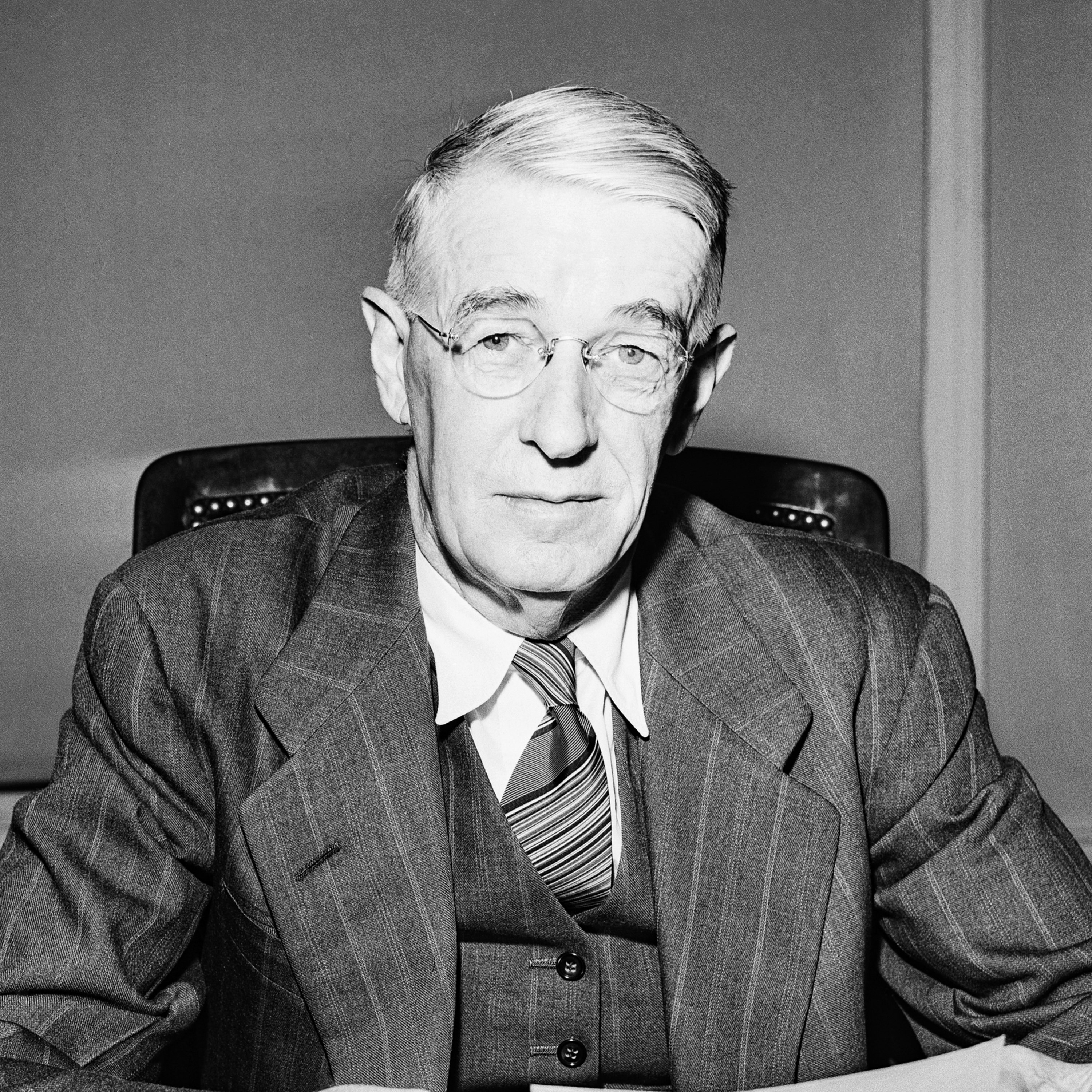
In "As We May Think," Bush makes analyzes and predicts the future of technology and innovation. He points out how, after WW2 had finished, physicists needed a peacetime objective to direct their efforts into, so that they could continue to innovate at the breakneck pace of the war. They war had flamed their passions and given them purpose, and while other types of scientists could transition back to academia easily, for physicists, transitioning from weapons research was much more of a context switch. Computing power and computational technology had been evolving quickly at that point in time, and Bush saw the potential for technologies like photography to compound innovation after innovation until they reached the point of utmost convenience and simple integration into daily life.
Amoungst the various sorts of technologies and processes Bush predicted to evolve such as DRY photography and the ability to compress vast amounts of data into physically tiny storage, Bush saw the potential for the internet, though he himself must not have known just how closely some of his theories tied to the internet. One of his most interesting propositions recognized the power of a new way of organizing information, not just a conventional sorting method like alphabetical order, but the power of storing associative connections between pieces of information (basically how the World Wide Web links together information today), and how that would allow us an important flexibility in accessing information, since we would be modeling information storage after the associative model of the human brain. This allows us to make speedy connections to relevant pieces of information that could not otherwise be achieved (in terms of speed of discovery) compared to sorting information and storing in a list/table manner.

Bush truly makes many predictions and proposes interesting ideas in his article. While it would be lengthy to go through them all, perhaps the most interesting prediction is the idea of a memex, something that parallels the concept of a modern computer. With the ability to store extremely many records in small amounts of physical storage, fast access to and storage of those records, and blah blah, a memex parallels modern computers in many ways. In describing the memex, Bush effectively predicted the importance of modern computer capabilities to handle the rate at which the sum total of human knowledge and research has been expanding, not only in allowing people to access the vast arrays of knowledge, but also to formulate the many different possible connections across different areas of research. Just imagine, without computers, if all modern scientific research was only accessible through written records in libraries, how much research would go unfound, and how many connections thus missed, by an individual researcher.

Bush also makes an interesting point at the beginning of his article about the systemic structure of research practices, since the current focus seems to be on publishing constantly, rather than making current research more accessible or interconnected. As a result it is impossible to keep up with all the knowledge being created. This is why modern computers are necessary, to be able to both access and manipulate the swaths of data at humanity's hands. In dreaming of the future (for tech and for science), Bush outlines the path for handling the sheer growing complexity of societal research and knowledge. To wield technology as our weapon in this universe of information is an interesting proposal indeed, visionary for his time (a world before the internet and personal computers), and an interesting thought experiment on what to do with the wartime physics besides throwing them back into academia.